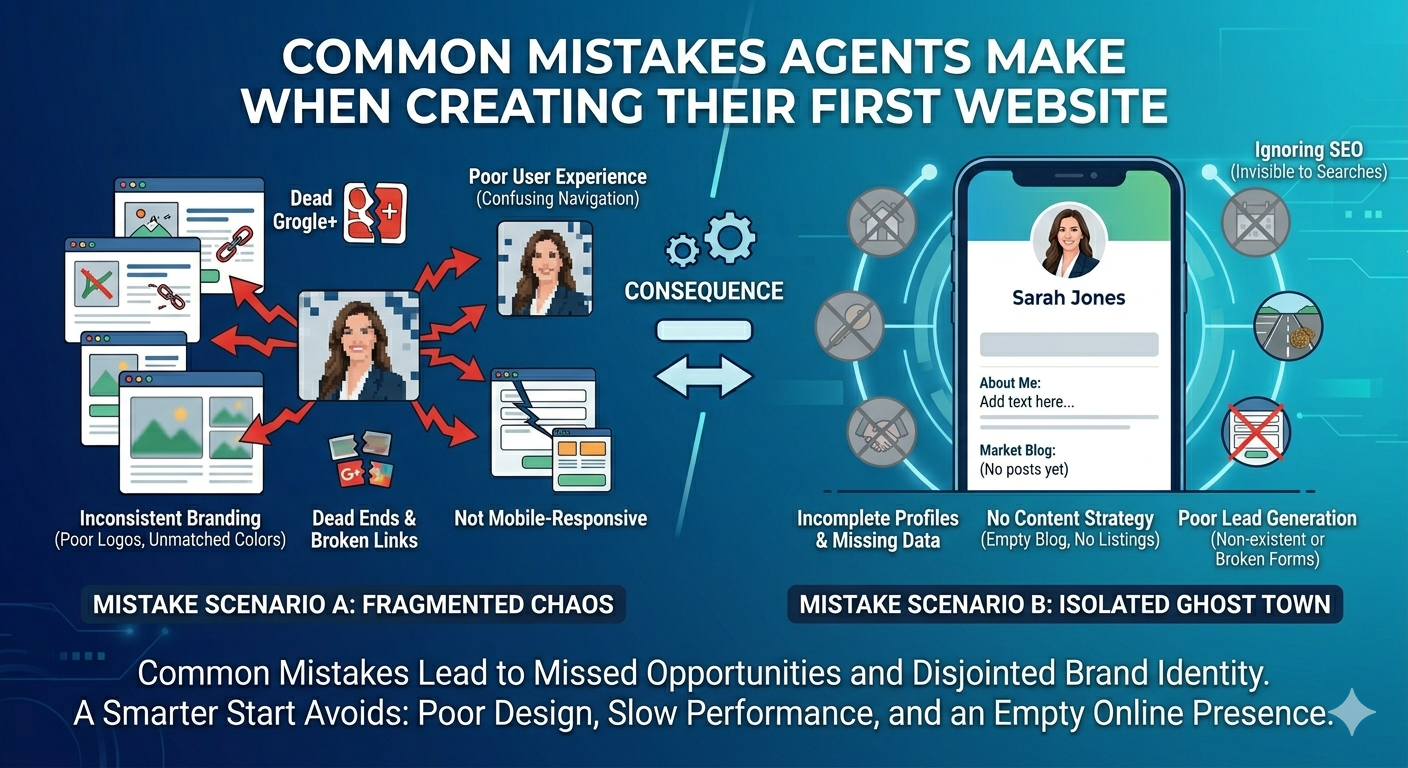
Creating a first website is an exciting step for any agent. Whether you are a real estate agent, broker, or independent consultant, a website represents credibility, professionalism, and growth. However, many agents unknowingly make mistakes during this process that limit the website’s effectiveness, waste money, and fail to generate leads.
In 2025, a website is not just about being online—it is about building trust, visibility, and conversions. This blog highlights the most common mistakes agents make when creating their first website and explains how to avoid them.
Treating the Website as a Digital Visiting Card
One of the most common mistakes agents make is viewing their website as nothing more than an online visiting card. They add a name, phone number, a short introduction, and consider the job done.
A professional website should:
-
Communicate value clearly
-
Explain services in detail
-
Guide visitors toward action
-
Build trust and credibility
When a website lacks purpose and structure, visitors leave without contacting the agent. A successful website must function as a lead-generation tool, not just an online identity.
Ignoring the Target Audience
Many first-time websites are built without a clear understanding of who the audience is. Agents often write content for themselves rather than for buyers or sellers.
Common signs of this mistake include:
-
Vague service descriptions
-
Too much personal information
-
Lack of buyer or seller-focused messaging
A website should answer visitor questions such as:
-
How can this agent help me?
-
Why should I trust them?
-
What problem do they solve?
When content is audience-focused, engagement and conversions improve significantly.
Choosing Design Over Usability
Agents often prioritize flashy designs, animations, or complex layouts. While design matters, usability matters more.
Poor usability includes:
-
Slow-loading pages
-
Confusing navigation
-
Hard-to-read fonts
-
Too many pop-ups
Visitors should be able to find information quickly and contact the agent easily. A clean, simple, and fast website always performs better than an overly designed one.
Not Optimizing for Mobile Users
A major mistake agents continue to make is neglecting mobile optimization. Most buyers and sellers browse property-related information on their smartphones.
A website that is not mobile-friendly leads to:
-
High bounce rates
-
Poor user experience
-
Lost leads
Mobile optimization should include:
-
Responsive design
-
Clickable phone numbers
-
Fast loading speed
-
Simple navigation
If a website does not perform well on mobile, it fails at its core purpose.
Forgetting Clear Calls to Action
Many agent websites provide information but never tell visitors what to do next. Without clear calls to action, users leave without engaging.
Effective calls to action include:
-
“Schedule a consultation”
-
“Request property details”
-
“Get a free valuation”
-
“Contact a local expert”
Every key page should guide visitors toward a specific action. A website without calls to action is a missed opportunity.
Poor or Generic Content
Content quality directly impacts trust. One of the biggest mistakes agents make is using copied, generic, or poorly written content.
Examples include:
-
Reusing content from other websites
-
Writing vague service descriptions
-
Overusing industry jargon
Buyers and sellers want clarity, honesty, and expertise. Original, well-written content that reflects local market knowledge builds confidence and credibility.
Ignoring Local SEO
Many agents build websites without considering search visibility. They assume simply having a website is enough to appear on Google.
Common local SEO mistakes include:
-
Not mentioning service locations
-
Missing city or area-specific pages
-
No Google Maps integration
-
Inconsistent contact information
Local SEO helps agents appear in searches like “real estate agent near me” or “property consultant in [city].” Without it, even a well-designed website may receive little traffic.
Overloading the Website With Too Many Features
Some agents try to include everything at once—blogs, complex filters, chatbots, animations, and multiple plugins—right from the beginning.
This often leads to:
-
Slower website performance
-
Technical issues
-
Higher maintenance costs
-
Confusing user experience
A first website should focus on essentials. Additional features can always be added later once the foundation is strong.
Not Highlighting Trust Signals
Trust is critical in real estate, yet many agent websites fail to highlight trust-building elements.
Missing trust signals often include:
-
Client testimonials
-
Reviews
-
Certifications or licenses
-
Years of experience
-
Local market expertise
Without these elements, visitors hesitate to make contact. Trust signals should be visible and authentic across the website.
Making Contact Information Hard to Find
It may sound surprising, but many websites hide contact details deep within pages or behind multiple clicks.
This frustrates visitors and reduces inquiries. Best practices include:
-
Visible phone number and email
-
Dedicated contact page
-
Click-to-call functionality
-
Contact buttons in headers or footers
Easy contact access increases lead conversion.
Not Planning for Updates and Maintenance
A first website is often treated as a one-time project. Agents build it and forget about it.
This results in:
-
Outdated information
-
Broken links
-
Old listings
-
Reduced credibility
A website should be easy to update and reviewed regularly. Keeping information current signals professionalism and reliability.
Relying Completely on Developers or Agencies
Many agents depend entirely on developers for even small changes. This leads to delays, extra costs, and lack of control.
A first website should be:
-
Easy to manage
-
Simple to update
-
Built on user-friendly platforms
Agents who can update content themselves maintain a more active and relevant online presence.
Not Measuring Website Performance
Another common mistake is failing to track how the website performs. Without analytics, agents do not know what works and what does not.
Important metrics include:
-
Visitor traffic
-
Page views
-
Inquiry submissions
-
Bounce rate
Tracking performance helps improve content, structure, and conversion over time.
Conclusion
Creating a first website is an important milestone for any agent, but mistakes can limit its impact. From ignoring mobile users and SEO to poor content and unclear calls to action, these errors prevent websites from delivering real business value.
In 2025, an agent’s website should be simple, trustworthy, user-focused, and easy to manage. Avoiding these common mistakes allows agents to build an online presence that attracts the right audience, builds trust, and generates consistent leads.
A well-planned website is not just an expense—it is a long-term asset that supports growth and credibility.
💡Description : Discover the most common mistakes agents make when creating their first website and learn how to avoid them to build trust, visibility, and leads in 2025.
✨ Tags : agent website mistakes, real estate agent website errors, first website for agents, real estate website tips, agent online presence mistakes, website best practices for agents