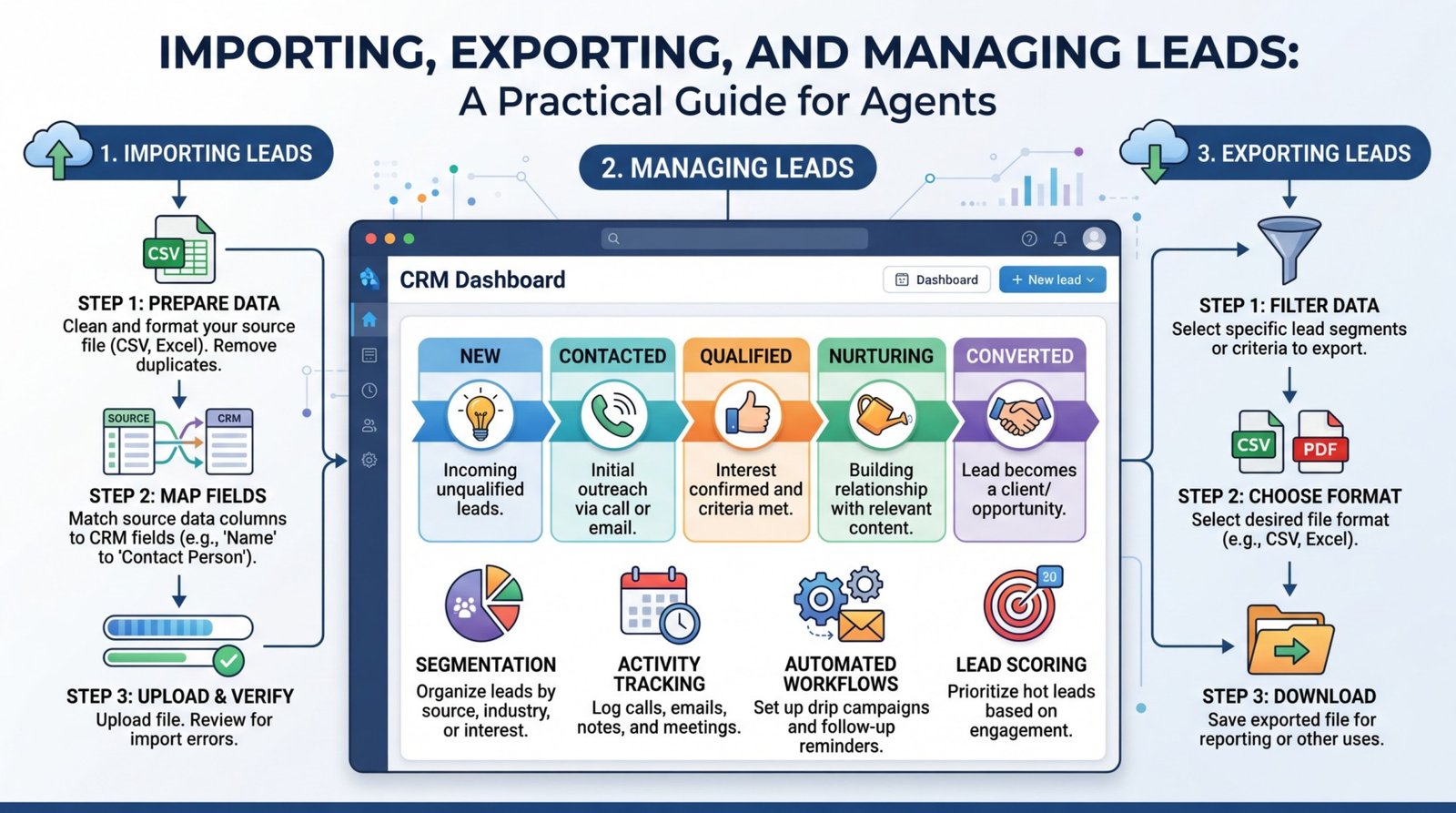
For real estate agents, leads are the foundation of business growth. Every enquiry represents potential revenue, future relationships, and long-term referrals. However, many agents struggle not with generating leads, but with managing them effectively. Leads often arrive from multiple sources, are stored inconsistently, or are lost during transitions between tools and platforms.
Importing, exporting, and managing leads properly is essential for maintaining control, ensuring consistent follow-up, and protecting valuable data. This practical guide explains how agents can handle leads efficiently, reduce errors, and improve conversion outcomes through structured lead management.
Understanding the Lead Lifecycle
Before addressing importing and exporting, it is important to understand the lead lifecycle. A lead typically moves through several stages, from initial enquiry to active conversation, nurturing, and eventual conversion or closure.
Problems arise when agents lose visibility of where a lead stands. Without clear tracking, follow-ups become inconsistent and opportunities are missed. Effective lead management ensures that every stage of the lifecycle is documented and actionable.
A structured approach to lead handling begins with clean data and clear processes.
Why Lead Importing Matters
Lead importing allows agents to bring data from external sources into a single system. These sources may include property portals, referral partners, spreadsheets, website forms, or past client databases.
Without proper importing, lead data remains scattered. This fragmentation makes it difficult to maintain follow-up continuity and track engagement history.
Importing leads correctly ensures that all enquiries are centralized, searchable, and ready for action.
Common Challenges During Lead Importing
Many agents experience issues when importing leads due to inconsistent formats, missing fields, or duplicate entries.
Contacts may appear multiple times with slightly different details. Important information such as enquiry source or property interest may be lost.
To avoid these problems, agents should standardize data fields before importing and review entries carefully after transfer. Clean data at the import stage saves significant time later.
Best Practices for Clean Lead Imports
Successful lead importing begins with preparation. Agents should ensure that names, contact details, and enquiry information are structured consistently.
Removing unnecessary columns and correcting errors before importing improves accuracy. It is also important to map data fields correctly so that information appears in the right place.
Regular audits after importing help identify duplicates or incomplete records early.
The Role of Lead Exporting in Real Estate
Lead exporting is equally important, though often overlooked. Agents may need to export data for reporting, backups, migration to new systems, or collaboration with partners.
Exporting ensures that agents retain ownership of their data and are not locked into a single platform.
Having the ability to export leads safely provides flexibility and long-term security.
Avoiding Data Loss During Exports
Improper exporting can result in lost information, broken records, or outdated files.
Agents should export data in commonly supported formats and verify that all necessary fields are included. Regular backups reduce the risk of permanent data loss.
Testing exported files ensures they are usable and complete before relying on them for decision-making or migration.
Centralizing Imported Leads for Better Control
Once leads are imported, centralization is critical. Storing all leads in one system provides visibility and reduces confusion.
Centralized lead management allows agents to see enquiry history, communication records, and current status at a glance.
This visibility improves response times and ensures no lead is overlooked.
Organizing Leads for Practical Use
Imported leads are only useful if they are organized effectively. Agents should categorize leads based on intent, source, location, or transaction stage.
Proper organization allows agents to prioritize actions and allocate time efficiently.
Clear organization transforms raw data into actionable opportunities.
Managing Duplicate and Inactive Leads
Duplicate leads are a common issue when importing from multiple sources. These duplicates can cause confusion and unprofessional communication.
Regular review and merging of duplicate records maintains data quality. Inactive leads should also be identified and archived appropriately.
Cleaning lead databases improves efficiency and reduces unnecessary follow-up.
Maintaining Accurate Lead Status Tracking
Lead management requires clear status updates. Agents should consistently update lead stages after every interaction.
Accurate status tracking prevents redundant communication and helps identify where prospects are in the decision-making process.
Consistency in status updates improves forecasting and follow-up effectiveness.
Supporting Consistent Follow-Up Through Structured Management
Leads are often lost due to inconsistent follow-up rather than lack of interest.
Effective lead management systems support reminders, scheduled follow-ups, and task tracking. This ensures that imported leads receive attention over time.
Consistent follow-up builds trust and keeps agents top of mind.
Using Lead Data to Improve Conversations
Imported lead data often contains valuable context such as enquiry source, property interest, or budget range.
Using this information during follow-ups makes conversations more relevant and personalized.
Context-driven communication improves engagement and conversion likelihood.
Protecting Lead Data and Privacy
Lead data includes sensitive personal information. Agents must handle imports and exports responsibly.
Secure storage, controlled access, and proper data handling practices protect both agents and clients.
Responsible data management supports compliance and maintains professional credibility.
Managing Leads During Platform Transitions
Agents may change platforms or tools as their business grows. During such transitions, lead importing and exporting become critical.
Planning transitions carefully prevents data loss and ensures continuity of follow-up.
Well-managed migrations allow agents to evolve systems without disrupting client relationships.
Leveraging Reporting and Insights
Organized lead data enables meaningful reporting. Agents can analyze enquiry sources, response times, and conversion trends.
These insights help refine marketing strategies and improve operational efficiency.
Data-driven decisions result in more predictable growth.
Scaling Lead Management as Business Grows
As lead volume increases, manual processes become unsustainable.
Structured importing, exporting, and management practices allow agents to scale without losing control.
Scalability ensures long-term stability and growth.
Building a Habit of Regular Data Maintenance
Lead management is not a one-time task. Regular reviews, cleanups, and updates maintain system health.
Agents who schedule routine data maintenance experience fewer issues and better performance.
Consistency turns lead management into a strategic advantage.
Conclusion
Importing, exporting, and managing leads effectively is essential for real estate agents who want consistent conversions and sustainable growth.
Clean imports ensure accurate data. Reliable exports protect ownership and flexibility. Structured management transforms raw enquiries into organized opportunities.
When leads are centralized, organized, and followed up consistently, agents reduce missed opportunities and improve professionalism. Effective lead management is not about technology alone. It is about discipline, clarity, and control.
For agents serious about building long-term success, mastering lead importing, exporting, and management is a practical necessity.
💡Description : Learn how real estate agents can import, export, and manage leads effectively to improve follow-up consistency, data accuracy, and conversion success.
✨ Tags : real estate lead management,importing exporting leads property,agent lead data organization,managing real estate enquiries,property lead tracking