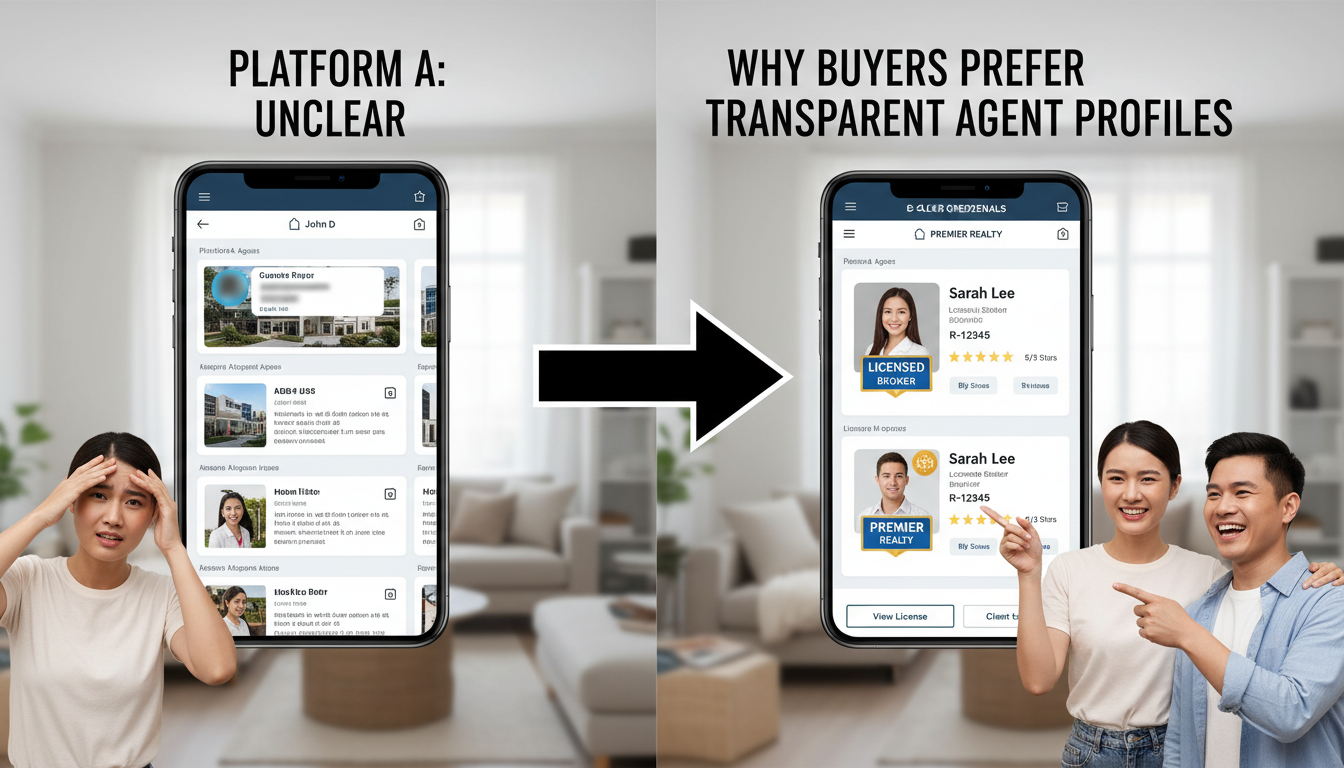
The way property buyers search for real estate has changed significantly in recent years. Instead of relying solely on referrals or physical site visits, buyers now begin their journey on digital platforms. These platforms act as the first point of evaluation, shaping perceptions long before any direct interaction with an agent takes place.
In this digital environment, trust plays a decisive role. Buyers are not only evaluating properties but also assessing the credibility of the professionals representing them. Platforms that clearly display agent credentials are increasingly preferred because they reduce uncertainty, improve transparency, and support informed decision-making.
The Growing Importance of Trust in Digital Property Searches
Property purchases involve large financial commitments and long-term implications. Buyers are naturally cautious and risk-averse, especially when interacting online.
Without face-to-face interaction, buyers rely heavily on available information to judge credibility. When agent credentials are clearly displayed, they provide immediate reassurance that the professional is qualified, accountable, and legitimate.
This trust is foundational. Platforms that prioritize credential visibility are better positioned to earn buyer confidence early in the search process.
Understanding Agent Credentials and Their Significance
Agent credentials include licenses, registrations, certifications, professional affiliations, and compliance records. These credentials indicate that an agent has met regulatory standards and adheres to professional guidelines.
For buyers, credentials are not technical formalities. They are signals of reliability, legal compliance, and ethical conduct. Clearly visible credentials allow buyers to quickly differentiate between qualified professionals and unverified intermediaries.
This clarity simplifies decision-making and reduces hesitation.
Reducing Information Asymmetry
One of the biggest challenges in real estate transactions is information asymmetry, where one party has more information than the other. Buyers often feel disadvantaged due to limited access to verified details.
Platforms that display agent credentials help balance this gap. When buyers can independently verify an agent’s legitimacy, they gain a sense of control over the process.
Reducing information asymmetry leads to more confident and constructive interactions.
Lowering Perceived Risk
Risk perception is a major factor influencing buyer behavior. Unclear or missing credentials raise concerns about legal compliance, professionalism, and accountability.
Visible credentials act as risk mitigators. They reassure buyers that the agent operates within established frameworks and is subject to oversight.
As perceived risk decreases, buyers are more willing to engage, inquire, and move forward with transactions.
Supporting Informed Buyer Decisions
Modern buyers are informed and research-driven. They expect access to relevant details before making contact.
Clear credential display supports this expectation by enabling buyers to assess agent suitability without relying solely on claims. This informed evaluation leads to better alignment between buyer needs and agent expertise.
Informed buyers are more decisive and satisfied with their choices.
Improving Platform Credibility
Buyers evaluate not only agents but also the platforms hosting them. Platforms that enforce credential visibility signal commitment to quality and transparency.
This enforcement enhances platform credibility. Buyers are more likely to return to and recommend platforms that demonstrate responsibility in vetting professionals.
Credential visibility becomes a competitive differentiator for platforms seeking long-term user trust.
Encouraging Professional Standards
When platforms require agents to display credentials, they encourage higher standards across the industry. Agents are motivated to maintain compliance and professionalism to remain visible and competitive.
This collective improvement benefits buyers by raising overall service quality. Buyers naturally gravitate toward environments where professionalism is the norm rather than the exception.
Platforms that promote standards create a more trustworthy marketplace.
Enhancing Buyer-Agent Compatibility
Credentials often provide insight into an agent’s specialization, experience, or training. This information helps buyers identify professionals who align with their specific needs.
Clear visibility allows buyers to choose agents based on relevance rather than guesswork. This compatibility leads to more productive interactions and better outcomes.
Buyers prefer platforms that support this clarity and alignment.
Reducing Buyer Frustration and Drop-Off
Ambiguity leads to frustration. When buyers encounter profiles with missing or unclear information, they may abandon the platform or postpone decisions.
Platforms that display credentials clearly reduce friction. Buyers can quickly evaluate options without unnecessary follow-up or verification.
This smooth experience keeps buyers engaged and moving forward.
Building Confidence Before First Contact
First impressions matter. Credentials displayed prominently help establish confidence before any conversation occurs.
When buyers feel assured of an agent’s legitimacy, they approach interactions with openness rather than skepticism. This positive starting point improves communication and trust-building.
Platforms that enable strong first impressions are more effective in facilitating transactions.
Aligning With Regulatory Expectations
Real estate regulations increasingly emphasize transparency and consumer protection. Platforms that display agent credentials align with these regulatory expectations.
This alignment reassures buyers that the platform operates responsibly and within legal frameworks. Regulatory transparency adds another layer of trust.
Buyers prefer environments that reflect compliance and accountability.
Long-Term Impact on Buyer Loyalty
Trust built through credential visibility extends beyond a single transaction. Buyers who have positive, transparent experiences are more likely to return to the same platform for future needs.
Loyalty is driven by confidence. Platforms that consistently display clear credentials create familiarity and reliability.
Over time, this loyalty translates into sustained platform usage and referrals.
Shaping Buyer Expectations in the Market
As buyers become accustomed to seeing credentials clearly displayed, their expectations evolve. Platforms that fail to meet these expectations may appear outdated or unreliable.
Credential visibility sets a new standard for digital real estate interactions. Buyers increasingly view it as a basic requirement rather than an added benefit.
Platforms that adapt to this shift remain relevant and trusted.
Conclusion
Buyers prefer platforms that display agent credentials clearly because transparency reduces risk, builds trust, and supports informed decision-making. Clear credential visibility empowers buyers, improves platform credibility, and encourages professional standards.
In a digital-first real estate market, trust must be established early and consistently. Platforms that prioritize agent credential transparency create safer, more reliable environments for property transactions.
As buyer expectations continue to rise, clear display of agent credentials will remain a critical factor in shaping preference, engagement, and long-term confidence.
💡Description : Property buyers prefer platforms that clearly display agent credentials because transparency builds trust, reduces risk, and supports confident real estate decisions.
✨ Tags : agent credentials real estate,buyer trust property platforms,real estate agent transparency,verified real estate professionals,property platform credibility